Beyond net zero – adapting design to a changing climate
 Thoughts
Minute Read
The flourishing English vineyards show how the warming climate is changing our landscape – but are our building designs keeping in step? The UK is a global leader in defining standards for net zero carbon emissions from buildings but, according to the Climate Change Committee, is less at the forefront with legislation on adaptation to climate change.
One of the challenges is how we design to protect from overheating. The response doesn’t need a revolution but rather an evolution of some tried and tested techniques for keeping cool.
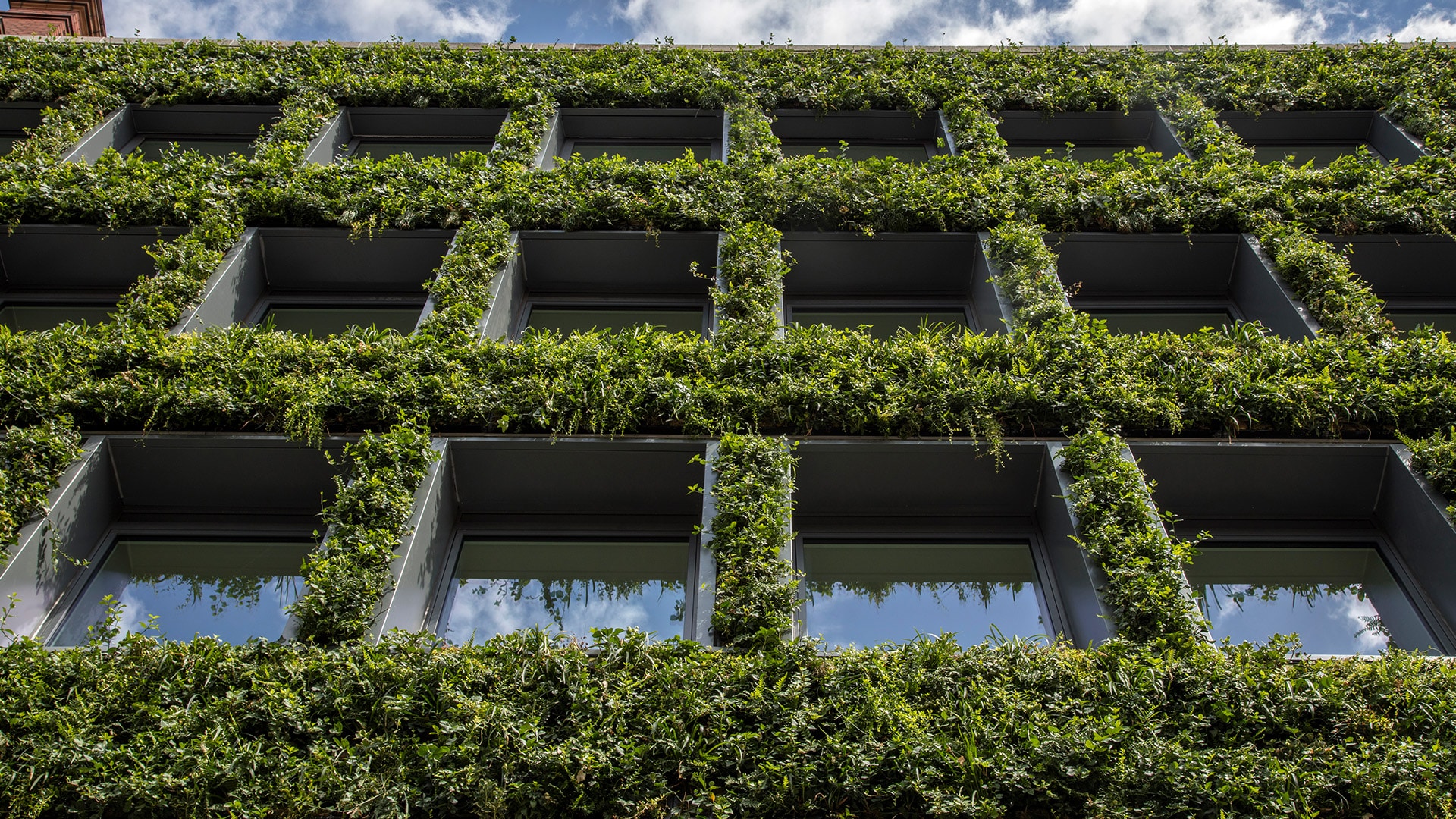
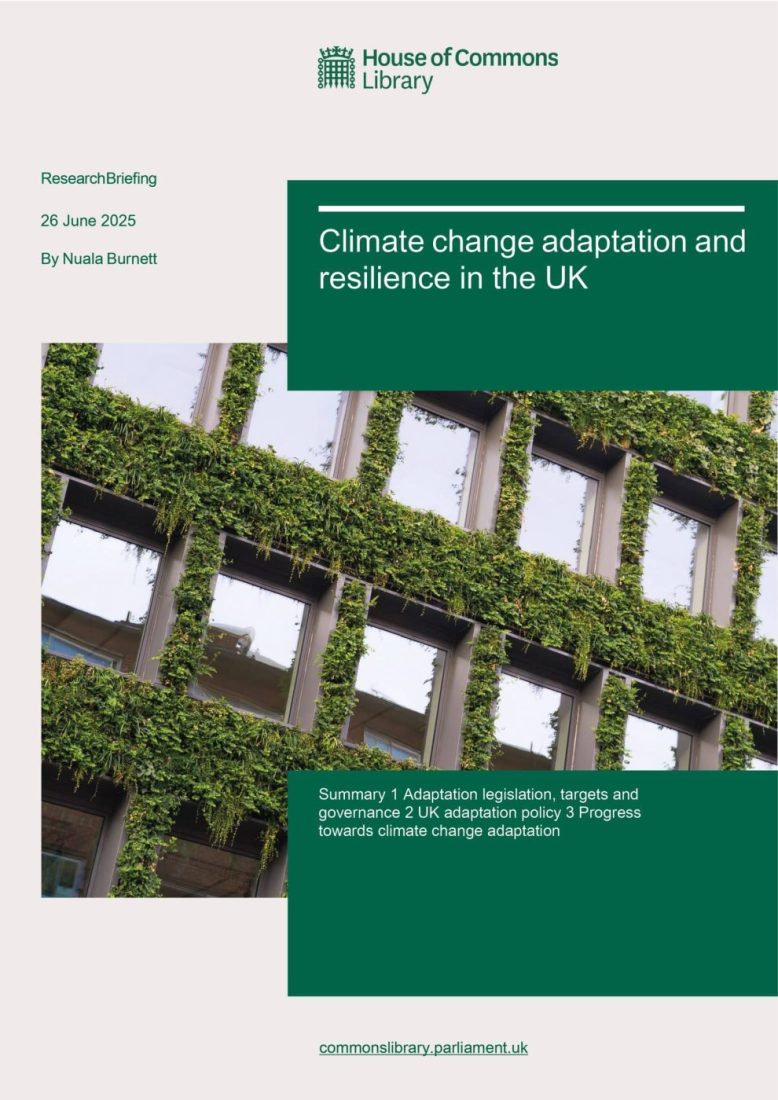
Plants are a good starting point – they help lower the temperature of the spaces around buildings. David Morley Architects’ design for Synergy House in Bloomsbury includes Camden’s largest living wall. It has shown the benefits which also include sound absorption, reducing pollution and a positive biophilic response. Perhaps that’s why it features on the cover of the House of Commons Research briefing paper on ‘Climate change adaptation and resilience in the UK’, published in 2025 as shown here. Amongst other recommendations, the paper is promoting passive design for cooling. This prompts us to look again at techniques we were exploring over 20 years ago.
We need to revisit thermal mass. On some of the hottest days last summer when air-conditioning systems were struggling, traditional naturally ventilated masonry buildings with tall ceilings and well-designed windows remained perfectly comfortable. Our Hub in London’s Regent’s Park kept cool through the mounded earth which wraps around the changing rooms. One metre below ground, the earth remains at a constant 10 degrees Celsius giving excellent cooling in summer as well as some free heating in colder weather.
For Loughborough University’s first Passivhaus building, the SportPark offices, we maximised the amount of exposed concrete in the soffit and walls to take advantage of the thermal mass. In our work for Grosvenor on the Ebury Street retrofit we boosted the thermal mass effect by using phase change dry wall. It might not replace the need for cooling but can potentially push its use into off peak energy demand periods.
We can learn a lot from responses to thermal mass, orientation, shading, and cross ventilation in the vernacular architecture of warmer climates. At the 2 St James Church in Gerrard’s Cross, night-time cooling was deployed through a semi-basement rock store, providing naturally cooled air throughout the day. This was a technology pioneered in Africa and other hot‑climate regions. As our climate shifts, adaptation will not come from invention alone, but from intelligently transferring and re‑applying well‑proven ideas—whether from rock‑stores or from vineyards.

Synergy House

Ebury Street

The Hub

SportPark
Further Information
House of Commmons Library
- https://commonslibrary.parliament.uk/research-briefings/cbp-9969/
SportPark
- https://www.lusep.co.uk/sport-park